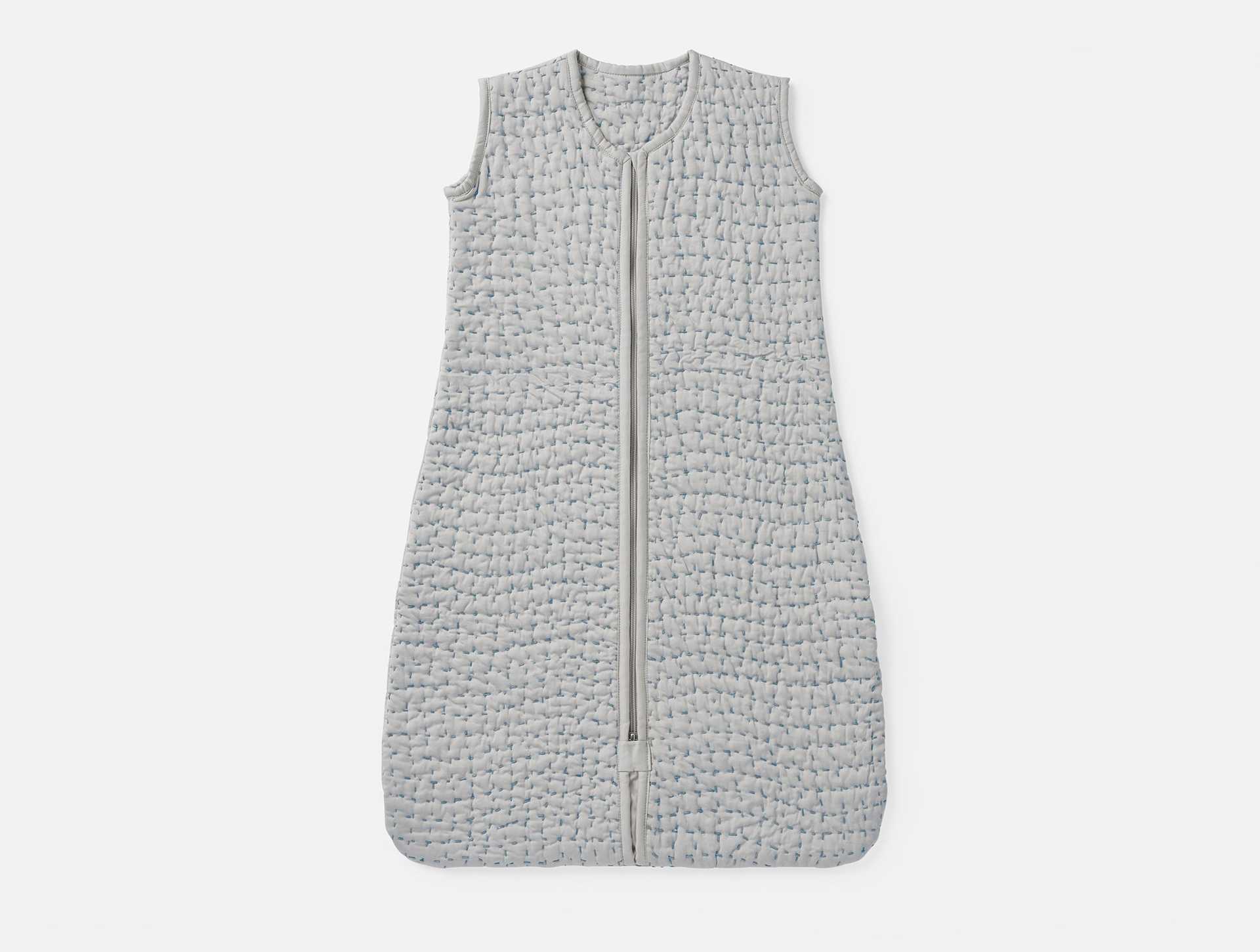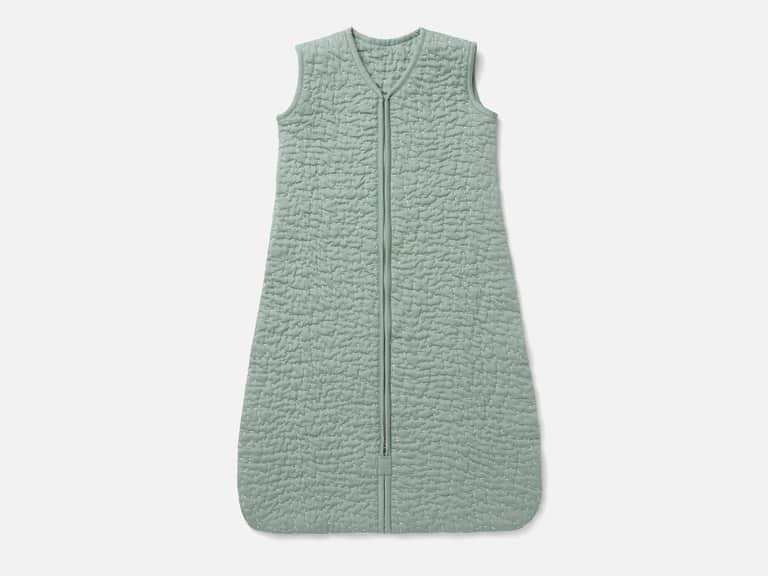
Bedding · Craft & construction
How Naturepedic Quilt Stitching Shapes Warmth, Texture, and Durability
A quilt’s stitching is more than a decorative decision. It helps keep the layers together, shapes the surface beneath a hand, and influences how the piece behaves on a bed. Understanding stitch pattern, spacing, shell fabric, and batting makes it easier to judge comfort, construction, and care.
The quiet engineering inside a quilt
A quilt can look simple from across the room: a soft rectangle, a pattern, a few folded corners. Up close, it is a small system. A top layer and a backing enclose batting, the insulating material that gives the quilt body and warmth. Stitching connects those layers, helping prevent the filling from gathering in one place or escaping into thin, lumpy pockets.
That practical job has a visible consequence. The stitches draw the fabric inward at regular intervals, creating channels, diamonds, grids, or a field of smaller marks. Those lines make relief across the surface. They affect the quilt’s drape, its weight distribution, and the way it folds at the foot of a bed. The pattern is decoration, but it is also construction.
For anyone comparing Naturepedic quilts or considering a handmade cotton quilt more generally, the useful question is not simply whether the stitching looks attractive. It is whether the stitch pattern suits the batting, how evenly it holds the layers, and whether the finished quilt feels right for the room and the sleeper. A quilt built for light, flexible layering has different priorities from one intended to provide a substantial layer of warmth.
There is no single best quilting technique. A channel construction can create a clean, directional surface; closer stitching may produce a more compact texture; and broader spacing can leave the batting with more room to loft. The right balance depends on the materials and intended use. A well-made quilt is a conversation between all three layers—not a contest between pattern and performance.
Why batting needs to be secured
Batting is what separates a quilt from a simple layered cover. It can add warmth, softness, and a little cushion, but a loose layer inside a cover would shift under repeated use. Each night brings movement; each wash and dry cycle puts the fabric under additional stress. Stitching gives the batting points of attachment to the shell and backing, helping the quilt act as one piece rather than three independent sheets.
How much stitching is needed depends in part on the batting. Different fibers have different structures and care requirements, and manufacturers may specify a maximum distance between quilting lines. That guidance matters: if the stitches are too far apart for a particular batting, the fill may migrate or bunch. If they are very close, the quilt can feel flatter or more rigid than intended. The aim is secure construction without needless compression.
Look for stitching that appears consistent across the quilt. Lines should be reasonably even and secure, with no obvious areas where the batting seems to drift or the shell puckers unexpectedly. Minor variations can be part of the character of handwork, and a handmade surface need not resemble a machine-drawn grid. What matters is that those variations do not compromise the quilt’s structure.
Even quilting does not mean every stitch must be identical. It means the construction is coherent: the spacing works with the fill, the seams hold, and the layers remain aligned. In use, that coherence helps preserve a more consistent feel across the bed. It also makes the quilt easier to fold, store, and layer with a duvet or blanket.
Channel stitching: line, rhythm, and drape
Channel stitching is among the clearest constructions to read. Parallel rows create long, narrow sections across the quilt, defining its surface with a restrained rhythm. On a channel-stitched cotton quilt, the lines can lend order without imposing a busy motif. They also help keep the batting distributed in the spaces between seams.
Because the stitches run in a consistent direction, channels can influence how the quilt bends and falls. The piece may fold naturally along its stitched lines, making it straightforward to lay across a bed or tuck at the foot. But the result depends on the width of the channels, the thickness of the batting, and the flexibility of the shell. A wide channel with airy batting will not feel like a narrow channel sewn through a denser fill.
Channel stitching can also make a quilt’s scale more apparent. Long lines emphasize width or length, depending on their orientation. The visual effect is quiet but not neutral: the eye follows the repeated seams, and the surface picks up shifting bands of light and shadow. In a simple bedroom, that texture can provide interest without the visual weight of a large printed pattern.
When assessing a channel construction, inspect both the front and the back if possible. Check that the lines continue cleanly and that the edges are finished securely. A small amount of natural variation is not necessarily a defect, especially in a quilt with visible handwork. Unsecured seams, abrupt breaks, or uneven areas that suggest shifting fill are more consequential signs to investigate.
Stitch spacing and the feel of the surface
Stitch spacing is a practical detail with a tactile result. More frequent quilting creates a denser network of attachment points. That can help stabilize the layers, but it may also make the surface feel firmer and less lofty. Wider spacing can preserve a softer, more relaxed hand, though only when it is appropriate for the batting and construction.
Think of it as a balance rather than a rule. Dense stitching is not automatically stronger, and open stitching is not automatically more comfortable. The shell, batting, thread, and intended care routine all contribute. A lightweight cotton quilt with modest loft may work well with a different layout than a thicker comforter intended to hold more fill.
Texture is created by what the stitches do to the fabric. Each point of tension pulls the layers together, producing small ridges and depressions. Close rows can make the surface look crisp and tailored. More open or hand-guided stitching may create a softer, irregular relief. Neither appearance tells the whole story about warmth, but both affect how the quilt feels against another layer and how it sits on the bed.
For sensitive sleepers, texture is worth considering alongside fiber and weave. A highly raised pattern may feel noticeable through a light sheet, while flatter quilting may disappear beneath it. If the quilt is usually covered by a duvet or placed under a top sheet, the surface may be less important than its weight and warmth. There is no universal comfort test: the quilt’s role in the bedding stack matters.
Shell fabric and batting work as a pair
Stitching cannot be judged in isolation. The shell—the fabric on the outside—determines much of the quilt’s first impression. Cotton is widely used because it is familiar, breathable, and available in a range of weights and weaves. A crisp percale shell may feel different from a smoother sateen or a softly textured crinkled fabric, even when the quilts have similar dimensions and batting.
Weave and finish affect how the shell responds to quilting. A light, flexible fabric may drape readily and show the stitch pattern clearly. A heavier or more structured cloth may create a firmer surface. A textured weave can add its own relief, so the quilting marks may appear more subtle—or more pronounced—depending on contrast and stitch scale. The finished hand comes from the material and the construction together.
Batting contributes the quilt’s loft and insulation. Cotton batting may have a different weight and drape from wool or a synthetic fill, and products vary even within the same fiber family. The word “cotton” alone does not tell you how warm a quilt will feel. Pay attention to the specified fill weight, overall construction, and intended season of use when that information is available.
Warmth is also personal and environmental. A quilt that feels comfortable in a cool room may feel too heavy in a warm one; a light layer may be ideal for summer or for pairing with a duvet. Stitching influences how the fill is held and how the quilt rests on the body, but it does not act as a thermostat. The complete bedding combination—and the sleeper’s preference—determines the experience.
Hand stitching, machine stitching, and visible character
Hand stitching can give a quilt a distinctive surface, with small differences in length, tension, or alignment that record the movement of the maker. Those variations may be part of its appeal. They can make the construction feel less mechanical and lend the finished textile a quiet, human scale. Yet handwork is not a guarantee of durability; the quality of the thread, the security of each stitch, and the care taken with the layers still matter.
Machine stitching can produce consistent lines efficiently and may be well suited to a quilt designed for regular use. Precision is useful, but a perfectly uniform seam is not the only measure of quality. A well-constructed quilt of either kind should have stitching suited to its batting and fabric, dependable edge finishing, and a clear care plan.
It helps to distinguish the look of handwork from a claim about how a product was made. A quilt may have a hand-stitched appearance or a hand-guided detail without every stage being performed by hand. Read construction descriptions carefully. When the process is important to a purchase, seek specific information rather than relying on a decorative name or a general impression.
The same caution applies to words such as “organic.” A fiber claim, a finished-product certification, and a description of stitching refer to different aspects of a textile. Check which material is certified, what standard applies, and whether the documentation covers the product or only a part of its supply chain. Clear language is more useful than broad promises.
A practical inspection before choosing
Online descriptions often emphasize color, certification, or styling, while the details that determine day-to-day use may be brief. A deliberate comparison can bring those details into focus. Start with the construction and ask what the quilt is meant to do: act as a light cover, add a middle layer, or provide most of the bed’s warmth?
- Read the layer description. Identify the shell fabric and the batting material, if specified. A cotton shell does not necessarily mean the fill is cotton.
- Check the quilting pattern. Channels, diamonds, grids, and hand-guided motifs each create a different appearance and distribution of seams.
- Consider stitch spacing. Look for construction appropriate to the fill, rather than assuming the tightest or loosest pattern is best.
- Assess weight and dimensions. A quilt must cover the mattress as intended and fit with the other layers you use.
- Look at edge finishing. Bound or otherwise finished edges help protect a high-use perimeter, where friction and handling are common.
- Review the care label. Washing and drying requirements should fit your routine and available equipment.
- Separate appearance from performance claims. Certifications, material details, and construction information answer different questions.
If you can handle a quilt in person, fold it once and notice where it bends. Does the fabric fall easily, or does the quilting make it feel board-like? Run a hand over the surface to understand how pronounced the stitches are. These observations will not predict every aspect of long-term wear, but they can help clarify whether the texture and drape suit your preferences.
For online comparisons, make notes rather than relying on product names. Terms like “lightweight,” “organic,” or “handstitched” can describe different things across brands. Specifics—fiber content, fill weight, stitch construction, dimensions, and care—make a more useful basis for comparison.
Care protects the seams as well as the fabric
A quilt’s longevity is not determined by stitching alone. Repeated washing, heat, friction, and storage conditions all influence how the shell and seams age. Follow the manufacturer’s care instructions first; the appropriate routine can vary by fiber, batting, dyes, finish, and construction. A gentle cycle may suit one quilt, while another may require different treatment.
When machine washing is permitted, avoid crowding the drum. A quilt needs room to move through the wash and rinse; compression can create uneven stress, particularly on a bulky item. Use a mild detergent and the recommended water temperature. Do not assume that a natural fiber automatically tolerates high heat, harsh detergent, or vigorous agitation.
Drying deserves equal attention. If the label allows tumble drying, follow its temperature guidance and check that the quilt dries thoroughly. Removing it promptly can limit creasing and help avoid prolonged exposure to heat. For a large or dense quilt, a drying rack or line may be appropriate if recommended, but its weight should be supported evenly so it does not stretch while damp.
Between washes, airing the quilt and using a top sheet or duvet cover can reduce the need for frequent laundering. A cover also takes much of the everyday contact and soil, though it should be washed according to its own care instructions. Rotate the quilt occasionally so that wear is not concentrated in one area, and store it clean and completely dry in a breathable place.
Inspect seams from time to time, especially around edges and spots that experience repeated pulling. If a stitch loosens, prompt repair may prevent a small opening from widening. Avoid tugging at loose threads. For a valuable or complex quilt, consult a textile repair professional when damage is extensive or the fabric is fragile.
The long view: comfort is built into the details
Quilt stitching is easy to treat as ornament. In practice, it is one of the decisions that connect appearance to use. The seams hold batting in place; their arrangement shapes texture; their spacing influences the quilt’s flexibility and sense of loft. Together with shell fabric and fill, those choices determine whether a quilt feels light and relaxed, crisp and tailored, or substantial and warm.
That is why the most useful comparison looks beyond a product photograph or a pattern name. Ask what the quilt contains, how it is stitched, how its weight suits the room, and what care it requires. For Naturepedic quilts and other cotton bedding, clear construction details make it easier to understand what a stitch pattern is doing—and whether it meets the practical needs of your bed.
There is no need to choose between beauty and durability as if they were opposing forces. A thoughtfully designed stitch can secure the layers while giving the surface its character. The best quilt is not necessarily the one with the most intricate pattern or the heaviest batting. It is the one whose materials, construction, warmth, and care expectations add up to a comfortable, dependable layer—night after night.