A Practical Guide to Choosing Handcrafted Duvet Covers: Techniques, Fabrics, and Care
A Time Magazine‑style exploration of artisanal duvet covers that blends technique, material science, and design storytelling for hobbyists and enthusiasts alike.
In a world of mass production, a handcrafted duvet cover stands as a quiet rebellion: a reminder that textiles are not merely functional, but expressive. From the crisp bite of organic cotton percale to the satin-smooth drape of long-staple cotton sateen, the fabric you choose for a duvet cover can alter the sleep experience as profoundly as any pillow or mattress. This guide threads together fabric science, technique, and care, offering practical insights for makers and dreamers who want to elevate their bedding with artisanal quality.
We’ll examine fabric weight, weave, and finish; we’ll decode closures, corner ties, and embroidery details; and we’ll offer care strategies that preserve texture, color, and stitch integrity. Along the way, we’ll meet three influential individuals from distinct eras who shaped textile craft and influenced how we think about handmade bedding today.
Fabric Fundamentals: Weave, Weight, and Touch
The tactile experience of a duvet cover begins with fabric choice. In artisanal bedding, three fabrics dominate the conversation: organic cotton percale, cotton sateen, and linen blends. Each weave yields a distinct hand and performance profile, influencing how a cover feels against skin and how it wears over time.
- Organic Cotton Percale is built on a 1-over-1-under weave that creates a crisp, matte surface with excellent breathability. Percale is typically lighter in weight and highly durable, making it ideal for those who sleep warm or who prefer a hotel-like, airy feel. A 300‑thread-count percale is a common benchmark that balances softness with structure.
- Cotton Sateen uses a long‑staple cotton with more warp‑filling intersections, producing a smoother surface with a subtle sheen. Sateen drapes beautifully and feels lush against the skin, often at a slightly heavier weight than percale. A 300–400 thread count is a common range, delivering a refined glow without sacrificing breathability when properly woven.
- Linen Blends appear less frequently but bring a natural, textured drape that softens with each wash. Linen blends can offer coolness in warmer climates and a casual, relaxed aesthetic that pairs well with other natural fibers in the bedroom.
Beyond weave and weight, finish matters. A garment-wold approach to finish includes pre‑shrunk fabrics, reduced chemical treatments, and tailored edge finishes such as knife-edged hems and hidden stitching. Embroidered details—whether delicate scallops like Pettine or kantha-inspired kantha textures—add character and narrative to a duvet cover, transforming a practical item into a keepsake.
Example Fabric: Organic Cotton Percale
Crisp, breathable, hotel-like
A 300-thread-count percale weaves tightly enough to feel crisp but softly worn with time. It handles washes well and offers a cool touch that many hot sleepers seek.
Example Fabric: Cotton Sateen
Silky drape, gentle sheen
Sateen’s surface is smoother and has a natural gloss that enhances color depth. It can feel more luxurious in cooler seasons when warmth is welcome.
Construction Details: Closures, Ties, and Embroidery
How a duvet cover closes and how the fill stays put are crucial for longevity and night-to-night comfort. Artisanal covers often emphasize deliberate construction choices that reduce wear and improve practicality during laundry cycles.
- Enveloping Closures—A classic, clean finish that hides the duvet securely while presenting a tidy exterior. Look for concealed zippers or traditional button closures with reinforced stitching to prevent wear along the opening edge.
- Corner Ties—Hidden corner ties or corner pockets secure the duvet insert in place, preventing shifting and bunching. This detail is especially valuable for heavier or multi-season inserts.
- Embroidery and Embellishments—Hand-stitched kantha-inspired quilting, scalloped edges, or subtle embroidery add narrative texture. When evaluating quality, inspect stitch uniformity, thread colorfastness, and the alignment of motifs relative to seams.
Even casual details contribute to daily use. A well-made duvet cover should wash evenly, resist pilling, and maintain its shape after repeated laundering. A good sign is consistent stitching, minimal loose threads, and edges that stay crisp after multiple cycles.
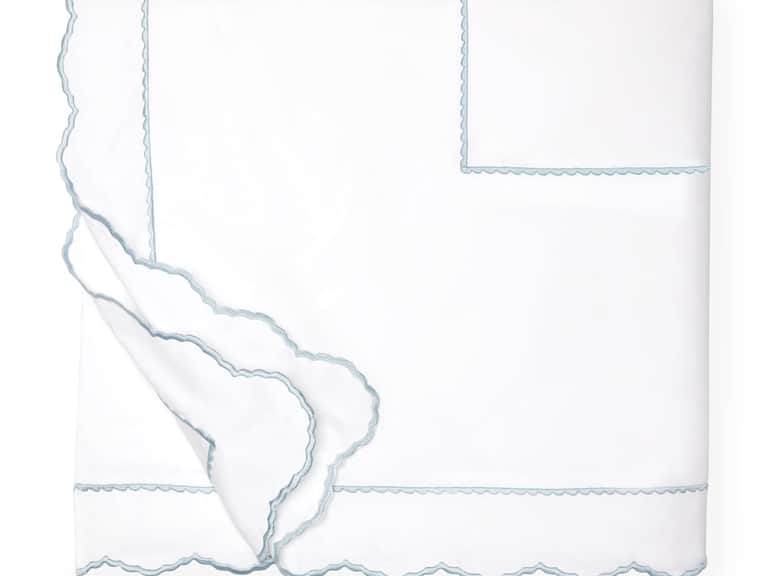
Pettine Duvet Cover (Sferra)
Italian tailoring with embroidered scalloped edges on 100% long-staple cotton percale. Crisp, chamois-soft hand with a matte finish. A refined silhouette that remains cool to the touch.
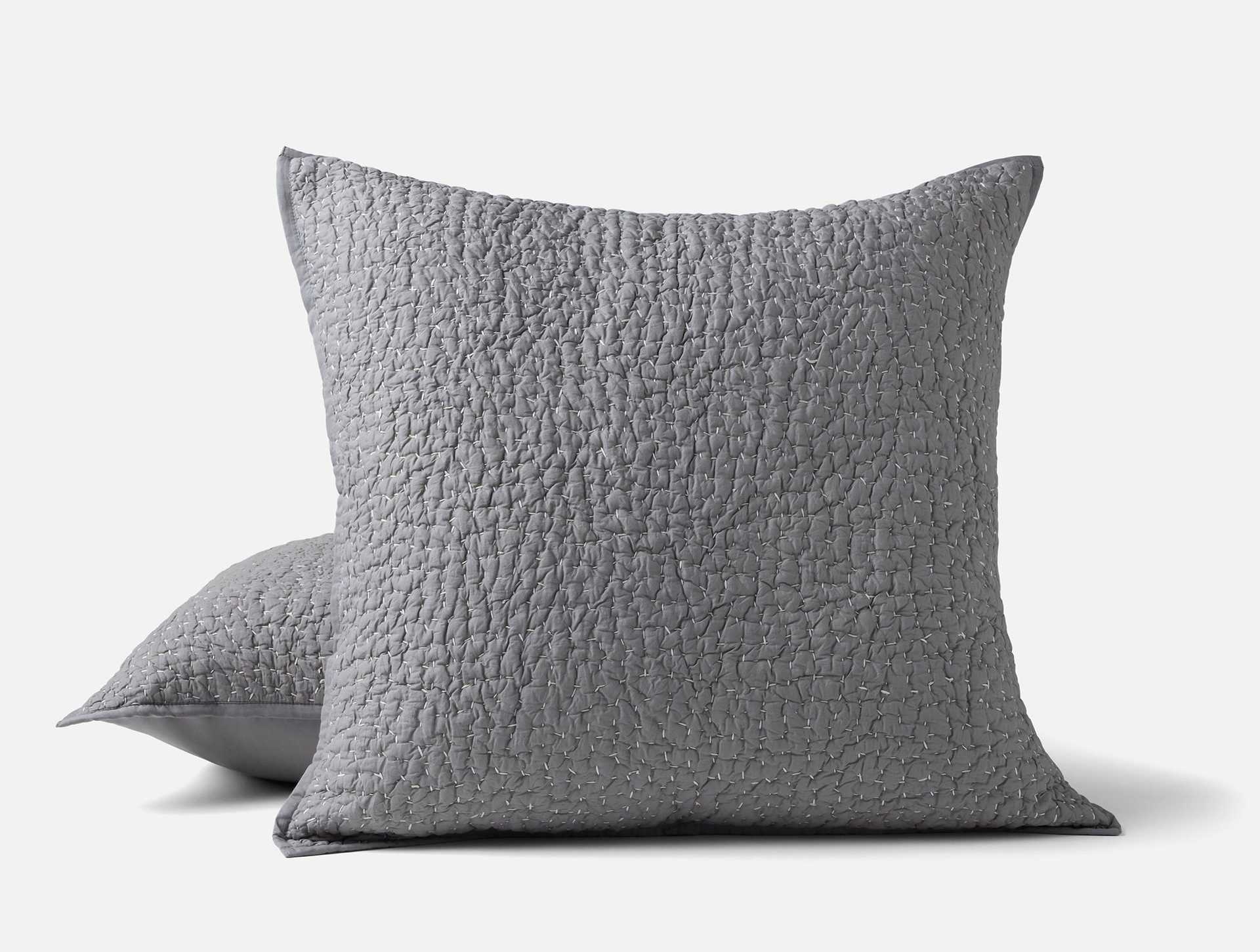
Pebbled Handstitched Organic Sham (Coyuchi)
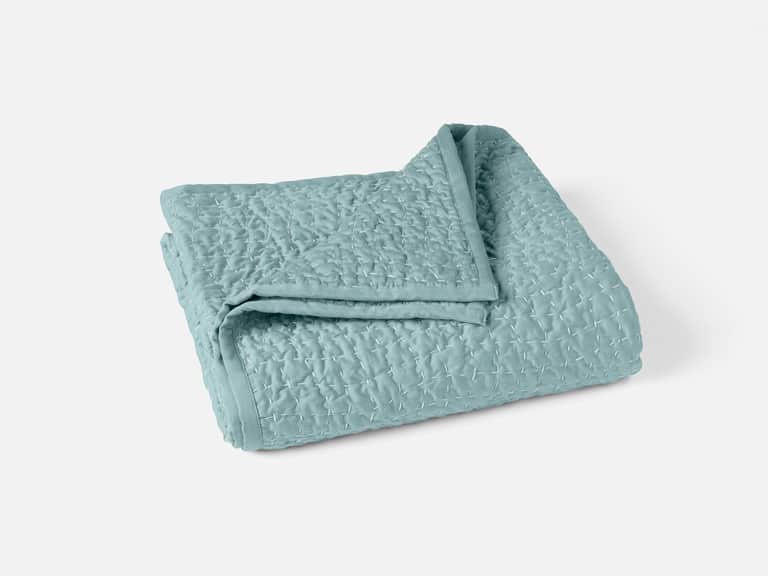
Hand-embroidered waves across 100% organic cotton, reversing to solid cotton with coconut shell buttons. Demonstrates how texture can elevate a simple bed setup while remaining durable through frequent laundering.
Care and Maintenance: Preserving Texture, Color, and Stitch
Care guidelines are not mere afterthoughts; they are the practical science that preserves the artisanal identity of a handmade duvet cover. Proper washing, drying, and storage help maintain the fabric’s hand feel, prevent color bleed, and protect intricate embroidery.
- Washing—Most handmade cotton covers respond well to warm water and a gentle cycle. Consider using a mild detergent free of optical brighteners that can accumulate on fibers over time. Washing with like colors minimizes color transfer and keeps embroidery threads vibrant.
- Drying—Line drying is ideal for longevity, but if using a machine dryer, select a low heat setting. Remove promptly to minimize wrinkling and reduce fiber stress that can occur with high heat.
- Color and Pilling—Over time, natural fibers may exhibit slight pilling or color fade. Rotate covers to ensure even wear and consider light garment-dyeing or gentle re-treatment to refresh color depth.
- Embroidery Care—Treat embellished edges with care; avoid strong chemical solvents near stitched areas. For heavily embroidered pieces, consider a gentler wash cycle or hand wash for extended longevity.
In the world of designer and artisanal bedding, care is not just maintenance but preservation—the difference between a cover that lasts a season and one that tells stories for years. For hobbyists who weave, quilt, and sew, the care routine can itself become part of the craft’s ritual.
Care for Pebbled Handstitched Organic Toddler Quilt
While not a duvet cover, this piece demonstrates the textile lineage that informs duvet covers. Made from 100% organic cotton with handstitched embroidery, it benefits from cold wash on a gentle cycle, tumble dry low, and warm ironing as desired.
General Maintenance Tips
For other artisanal covers, follow the manufacturer’s care label and test a small fabric area before washing. If colorfastness is uncertain, wash in cold water first and air dry to minimize any potential dye migration.
Sourcing and Collaboration: A Little Time Travel
The handmade bedding tradition has been shaped by a lineage of designers, artisans, and textile pioneers who reframed how we think about comfort, texture, and craft. Three notable individuals from different eras illustrate the continuity of this craft and its modern reinterpretation:
- Mary Winkler (1870s–1930s): A pioneer in cooperative textile production, Winkler’s era championed accessible home sewing and community workshops. Her work underscores how intimate, small-batch production can scale through shared expertise, a principle echoed in today’s artisan-led duvet cover collaborations and guest posts.
- Elio Sferra (mid-20th century): An Italian tailor whose firms popularized refined percale and embroidery work, Sferra’s legacy lives in modern duvet covers that pair Italian craftsmanship with contemporary minimalism. The Pettine duvet cover exemplifies how embroidery and edge detailing elevate a cover’s silhouette without sacrificing ease of care.
- Coyuchi and the Modern Craft Revival (late 20th into 21st century): A contemporary example of a brand that champions GOTS-certified organics and fair trade practices, Coyuchi embodies a globalized craft economy. Their Pebbled Handstitched Organic Sham illustrates how traditional hand stitching can be integrated into responsibly produced bedding, maintaining both sustainability and tactile richness.
These figures reveal a throughline: handmade bedding blends technical precision with storytelling. Today’s artisans draw on centuries of technique—hand embroidery, kantha-inspired quilting, and refined edges—while embracing modern standards of sustainability, transparency, and product lifecycle thinking. The result is a duvet cover that does not merely cover a bed but frames a narrative about care, culture, and craft.
Product Spotlight: Pebbled Handstitched Organic Toddler Quilt

Pebbled Handstitched Organic Toddler Quilt
Coyuchi, India | 50" x 36" | 100% organic cotton
This toddler quilt embodies the quiet luxury of handwork: a compact profile with hand-stitched embroidery that adds texture without bulk. The 100% certified organic cotton exterior and natural organic cotton batting ensure year‑round warmth and breathability, making it suitable for naps and early bedtimes alike. GOTS and Fair Trade Factory Certified production certify responsible sourcing and ethical manufacturing, aligning with a growing consumer demand for transparent supply chains in handmade textiles.
Price: $128.00
A Practical Path Forward: Suggested Article Sequencing and Learnings
For readers who want to embark on a crafting journey or sharpen their purchasing instincts, a carefully structured content path can amplify learning. Consider a phased approach that mirrors professional pattern development:
- Beginner: How to measure for a duvet cover size; choosing fabric weight; simple envelope closure basics.
- Intermediate: Techniques for aligning patterns; adding corner ties; color-matching embroidery motifs; care label literacy.
- Advanced: Pattern drafting for custom duvet inserts; multi-block quilting for a bespoke cover; combinations of embroidery and matelassé textures.
As you explore these techniques, you can reference contemporary brands that model best practices in sustainable production and high-fidelity craftsmanship, including Coyuchi, Sferra, and Naturepedic. The guide’s ethos remains consistent: celebrate craft, prioritize durability, and embrace education as a living tradition.
Closing Thoughts: The Craft of a Better Night’s Sleep
A handcrafted duvet cover is more than fabric and thread. It is a statement about how we care for our environments, how we honor the hands that stitch, and how we sustain practices that connect heritage with modern life. The best covers are not merely aesthetically pleasing; they are durable, washable companions that invite you to slow down, learn, and experiment.
Whether you are selecting a cover for a pristine guest room or crafting a duvet that tells a family story, the aim remains the same: a tactile, reliable, beautiful layer that enhances the rituals of sleep. And as the textile world moves forward, those who weave technique with care—and share what they know—will keep this craft alive for generations to come.
Note: This article references a curated mix of fabrics and finishes from artisanal bedding producers and designers, including organic cotton percale and Sferra’s Pettine line, Coyuchi’s Pebbled Handstitched pieces, and similar craftsmanship-driven offerings. The product spotlight used above is intended to illustrate how a handcrafted duvet cover can embody both technique and care.